


 Helmets (1)
 Showcases vetrina display box (6)
 Models cars (474)
 Models motorcycles motorbikes (3)
 Models trucks (10)
 Models trailers (1)
 Models airplanes aircrafts (1)
 Road street cars (389)
 Movie film cars (13)
 Concept cars – prototypes (2)
 Off-road vehicles SUV (12)
 Van minibus vehicles (8)
 Political cars (1)
 Police cars (8)
 Formula 1 F1 cars (25)
 Racing cars (6)
 Rally cars (10)
 Road street motorcycles motorbikes (3)
 Road street trucks (10)
 Military airplanes aircrafts (1)
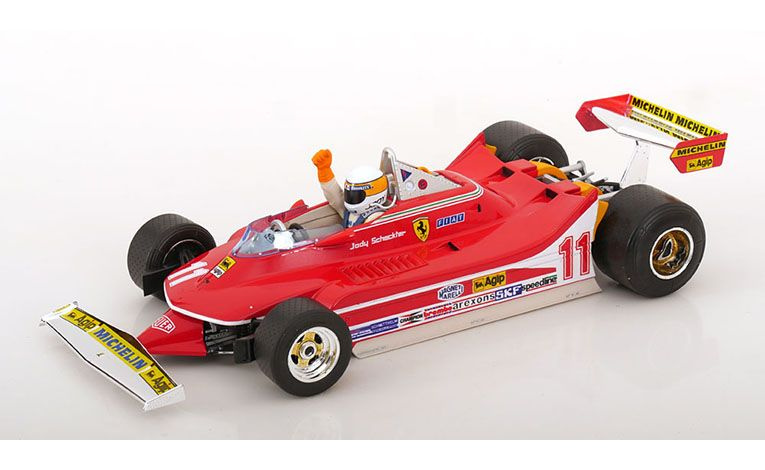
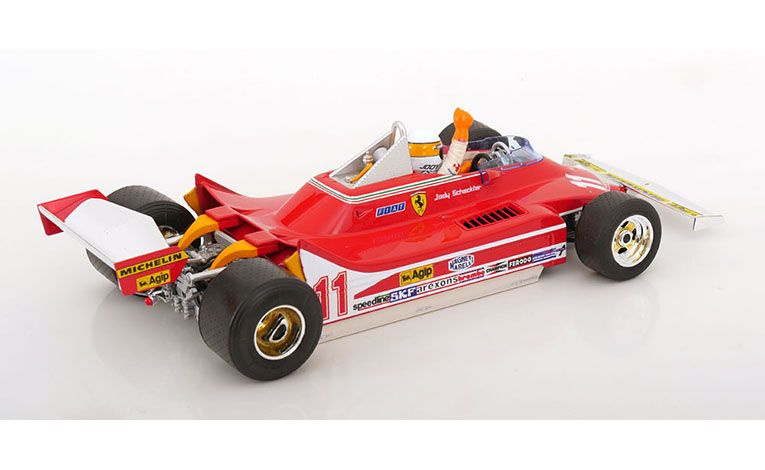
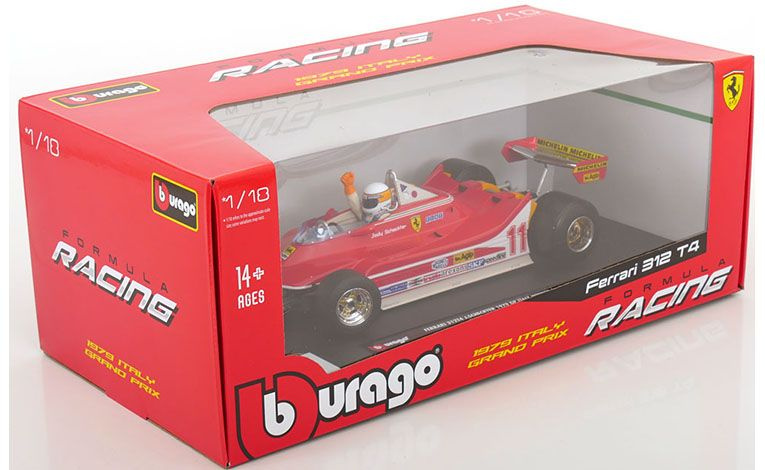
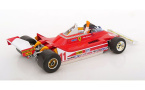
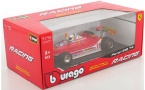
- Product SKU: 18-16814-18-01544
- Producer: Bburago
- Note: Winner GP Monza, Italy, driver Jody Scheckter
- Availability: Item available
The Ferrari F1 312 T4 Sieger in 1:18 / 1:18 scale by Bburago is an attractive collectible model of one of the most famous Ferrari Formula 1 cars from the 1979 season. This highly detailed model represents the legendary Ferrari 312 T4 driven by Formula 1 World Champion Jody Scheckter, featuring the iconic Ferrari red color, racing number 11 and authentic-looking Fiat and Agip sponsor markings that defined the appearance of Ferrari Formula 1 cars during this era.
The original Ferrari 312 T4 competed in the 1979 Formula 1 World Championship and became one of Ferrari's most successful single-seaters of the late 1970s. Designed by Mauro Forghieri, the car represented a combination of advanced engineering, a powerful engine, low weight, sophisticated suspension and aerodynamic solutions characteristic of the golden era of Formula 1. During the 1979 season, the Ferrari 312 T4 achieved a total of 6 race victories, Ferrari won the Constructors' Championship, while Jody Scheckter secured the Formula 1 Drivers' World Championship.
The Ferrari F1 312 T4 Sieger in 1:18 scale represents the car driven by Jody Scheckter to victory at the 1979 Italian Grand Prix at Monza. On September 9, 1979, Scheckter crossed the finish line first at the legendary Autodromo Nazionale Monza, ahead of his Ferrari teammate Gilles Villeneuve. This victory was particularly significant because Scheckter secured the 1979 Formula 1 World Championship at Monza, making the race one of the most important moments of his career and Ferrari's racing history.
One of the most important components of the Ferrari 312 T4 was its Ferrari Tipo 015 naturally aspirated flat-12 engine. The engine featured 12 cylinders arranged at a 180-degree angle, a displacement of 2,992 cm³ and a four-valve-per-cylinder configuration. This resulted in a total of 48 valves, while the cylinder bore measured approximately 80 mm and the piston stroke approximately 49.6 mm. This engine configuration allowed very high operating speeds and provided the distinctive response of a naturally aspirated racing power unit.
The Ferrari Tipo 015 developed approximately 500 hp at around 12,000 rpm, which represented an excellent power-to-weight ratio for a car weighing approximately 590 kg. This corresponds to approximately 0.85 hp per kilogram or around 1.18 kg per horsepower. Without turbocharging or modern electronic engine-management systems, the engine developed its performance through naturally aspirated displacement, high engine speeds and advanced mechanical engineering. The combination of 12 cylinders and high revs created the unmistakable Ferrari engine sound that became one of the defining characteristics of classic Formula 1.
The engine was mounted longitudinally in the rear of the car and formed an important structural part of the overall chassis design. Its wide flat-12 configuration contributed to a low center of gravity while also influencing the shape of the rear bodywork and aerodynamic underbody. Compared with modern Formula 1 power units, the drivetrain was highly mechanical and required direct driver input. Jody Scheckter had to carefully control the throttle, manage rear-wheel traction and make effective use of the available engine power.
Engine power was transmitted to the rear wheels through the Ferrari Tipo 022 5-speed manual gearbox. The transmission featured five forward gears and was mounted at the rear of the car. In an era before semi-automatic Formula 1 gearboxes, the driver had to manually select every gear, requiring considerable precision, timing and speed of reaction. The gearbox had to make effective use of approximately 500 hp across different types of circuits, from slow and technical corners to high-speed straights.
At Monza, the transmission was particularly important because of the nature of the circuit. The Autodromo Nazionale Monza is famous for its long straights and high average speeds, meaning the Ferrari required gear ratios capable of delivering a high top speed while still providing strong acceleration out of slower chicanes and corners. The Ferrari 312 T4 could reach a top speed of approximately 277 km/h, depending on the aerodynamic configuration and gearing used for a particular circuit.
For braking, the Ferrari 312 T4 used ventilated disc brakes designed to withstand extreme loads at racing speeds. The braking system had to efficiently dissipate the large amounts of heat generated during heavy braking. The rear brakes were positioned close to the inner section of the drivetrain, helping to reduce unsprung weight and contributing to the overall mechanical efficiency of the car.
In an era without ABS, traction control or electronic brake-force distribution, Jody Scheckter had to control braking entirely through his own skill and feel. At high speeds, the driver had to apply substantial braking force and then carefully modulate the pressure to avoid locking the wheels. At Monza, where the car could slow from speeds above 250 km/h to considerably lower speeds for the chicanes and corners, braking performance was one of the key factors influencing lap times and race performance.
The Ferrari 312 T4 featured independent suspension on all four wheels, designed to provide the best possible tire contact with the track surface. Both the front and rear suspension systems used springs and dampers combined with carefully optimized suspension geometry. This allowed engineers to control body movement, weight transfer and the behavior of the car through corners. Suspension settings could be adjusted according to circuit characteristics, track conditions and the desired level of mechanical grip.
The low center of gravity provided by the flat-12 engine further improved stability. The car had to be sufficiently stiff to make effective use of ground-effect aerodynamics while remaining compliant enough for the tires to maintain contact with the track. Finding the right balance between mechanical grip and aerodynamic grip was one of the most important aspects of setting up the Ferrari 312 T4.
The dimensions of the Ferrari 312 T4 also demonstrate how wide and low this Formula 1 car was compared with conventional road cars. The car measured approximately 4,460 mm in length, around 2,120 mm in width and approximately 1,010 mm in height. The wheelbase was approximately 2,700 mm, while the front track measured around 1,700 mm and the rear track approximately 1,600 mm. The racing weight was approximately 590 kg, depending on the configuration, fluids and equipment carried during a race.
The combination of low weight and high engine output was one of the car's major strengths. With approximately 590 kg and around 500 hp, the Ferrari 312 T4 had a power-to-weight ratio of approximately 1.18 kg per horsepower. This allowed strong acceleration, high speeds and excellent cornering performance. Low weight was particularly important during this period because Formula 1 cars were considerably simpler than modern machines, without the extensive electronic systems and safety equipment that contribute to the weight of contemporary racing cars.
The Ferrari 312 T4 used Michelin racing tires developed for Formula 1 cars of the period. The front tires measured approximately 20–28/57 × 13, while the rear tires were approximately 38–42/68 × 13. The wheels featured 13-inch rims, which were characteristic of Formula 1 cars during this era. The wider rear tires were essential for transferring approximately 500 hp to the asphalt, while the front tires were optimized for precise steering response and controlled turn-in.
Aerodynamics was one of the defining characteristics of the Ferrari 312 T4. The car was developed during a period when ground-effect aerodynamics was becoming increasingly important in Formula 1. The specially shaped underbody, side air intakes, side skirts and rear wing were designed to increase downforce without creating unnecessary aerodynamic drag.
With the ground-effect concept, airflow passing beneath the car helped create an area of lower pressure, effectively pulling the car closer to the track surface. This increased aerodynamic downforce and improved cornering grip. The Ferrari 312 T4 was particularly interesting because engineers had to balance the advantages of the flat-12 engine with the aerodynamic requirements of ground effect. The wide engine configuration limited some possibilities for underbody design, but Ferrari succeeded in creating a highly competitive aerodynamic package.
The bodywork of the Ferrari 312 T4 was designed with an emphasis on reducing weight and managing airflow efficiently. The wide side air intakes supplied cooling air to the engine and other systems, while the bodywork helped direct airflow around the wheels and toward the rear of the car. The rear wing was essential for generating the required downforce, while its configuration could be adjusted according to the characteristics of each circuit.
The chassis was constructed as an aluminium monocoque, an advanced solution for reducing weight while maintaining structural rigidity. The monocoque formed the main cockpit and load-bearing structure of the car, while the engine, suspension and other components were integrated around the main chassis. This approach helped Ferrari achieve a favorable balance between low weight, rigidity, performance and structural strength.
The cockpit of the Ferrari 312 T4 was extremely minimalist compared with modern Formula 1 cars. Jody Scheckter sat in a compact space surrounded by essential mechanical components and instruments. The steering wheel was much simpler than today's sophisticated Formula 1 steering wheels, while the driver had a gear lever, pedals and analogue instruments for monitoring the engine and other critical systems.
The equipment inside the car was entirely focused on racing performance. There were no large digital displays, ABS, traction control, active suspension or modern electronic driver-assistance systems. The driver had to judge the limit of grip, control approximately 500 hp, manually shift through five gears and precisely manage braking. This direct connection between driver and machine is one of the reasons why the Ferrari 312 T4 remains such a fascinating car from the classic era of Formula 1.
The appearance of this Bburago Ferrari 312 T4 1:18 model is enhanced by the iconic Ferrari red color, racing number 11 and distinctive Fiat and Agip sponsor markings. The bodywork details, cockpit, wheels, racing tires, rear wing, side air intakes and aerodynamic elements give the model the recognizable appearance of the original Ferrari Formula 1 car from 1979.
The 1:18 scale is one of the most popular scales among die-cast model car collectors because it offers an excellent balance between overall size and visible detail. The model is large enough for collectors to appreciate the characteristic body lines, cockpit, wheels, tires, sponsor markings and aerodynamic elements, while remaining compact enough for display in a cabinet, office, living room or dedicated motorsport collection.
Bburago is a well-known die-cast model car manufacturer and produces Ferrari models under official Ferrari licensing. The quality of Bburago models is reflected in their recognizable designs, attractive finishes, bodywork details, authentic colors and characteristic markings. The Ferrari F1 312 T4 in 1:18 scale is particularly appealing because it combines historical significance, technical detail and an iconic appearance, making it an excellent choice for collectors looking for an impressive model of a legendary Formula 1 car.
For collectors, the Ferrari F1 312 T4 Sieger Bburago 1:18 represents much more than an ordinary miniature car. It represents an important chapter in Formula 1 history and commemorates the season in which Jody Scheckter became World Champion. Its connection with the legendary victory at Monza, Ferrari's racing heritage, racing number 11 and the distinctive Fiat and Agip sponsor markings make this model an especially attractive addition to any Ferrari or Formula 1 collection.
The Ferrari F1 312 T4 1:18 is also an excellent gift idea for Formula 1 fans, Ferrari enthusiasts, Jody Scheckter supporters and collectors of historic racing cars. It can be an excellent birthday gift, Christmas gift, anniversary present or special gift for anyone who appreciates classic Formula 1 cars and motorsport history. Thanks to its attractive design, rich history, technical specifications and Bburago craftsmanship, this model is an excellent gift idea for anyone who loves Ferrari, Formula 1 and legendary racing cars.
Whether you are a lifelong Ferrari fan, an admirer of Jody Scheckter, a Bburago model collector or simply looking for a special gift idea for a Formula 1 fan, the Ferrari F1 312 T4 Sieger 1:18 Bburago is an excellent choice. The combination of iconic Ferrari design, a 2,992 cm³ flat-12 engine producing approximately 500 hp at around 12,000 rpm, a 5-speed manual gearbox, ventilated disc brakes, independent suspension, Michelin racing tires, ground-effect aerodynamics, approximately 590 kg racing weight, a top speed of around 277 km/h, distinctive Fiat and Agip sponsor markings, racing number 11 and its connection with victory at the Italian Grand Prix at Monza makes this model an attractive collectible and impressive display piece.
The Ferrari 312 T4 Bburago 1:18 brings the atmosphere of the 1979 Formula 1 World Championship into a detailed miniature. As a replica of the car with which Jody Scheckter achieved one of the most important victories of his career and secured his Formula 1 World Championship title, this model is a valuable addition to any Ferrari, Formula 1 or historic racing car collection. With its impressive level of detail, historical significance and technical characteristics, this Ferrari F1 1:18 model is an excellent choice for collectors, classic Formula 1 enthusiasts and anyone looking for a high-quality and eye-catching replica of a legendary Ferrari racing car.
Production year of vehicle and equipment: 1979
Scales and sizes: 1:18 1/18
Model length: 24,80 centimeters
Material type: metal Formula 1 F1 car
Product features:
- very authentic exterior
- very authentic interior
- all the wheels turn, and the front wheels rotate
- nothing opens
- with the model F1 car comes a figure of driver Jody Scheckter in a sitting position
- model F1 car comes on base in quality packaging
- high quality of production
We can source any model vehicle outside of our current offer
If you're looking for specific model vehicle that are not currently visible in our online store, feel free to send us an inquiry at info@modelcarsgifts.eu
Products carefully packaged and protected during shipping
When packing your products, we use high-quality protective materials to ensure they arrive at your address undamaged.
Reliable support for our customers at all times
If you have any questions or concerns, don’t hesitate to reach out to us at info@modelcarsgifts.eu
100% secure shopping
We use the latest data protection standard, Secure Socket Layer (SSL), to ensure that our customers’ payments are extremely secure.
Related products
 Model Vehicles
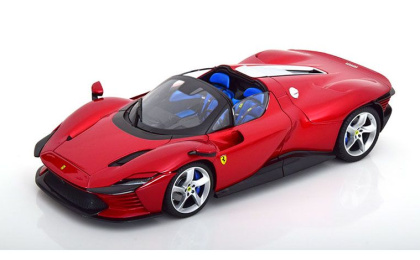
1:18 1/18 Ferrari Daytona SP3 Spider 2022 2025 red magma Bburago Signature Series
;)
 Model Vehicles
1:12 1/12 BMW E24 Series 6 M635 CSi 1987 1989 grey KK-Scale